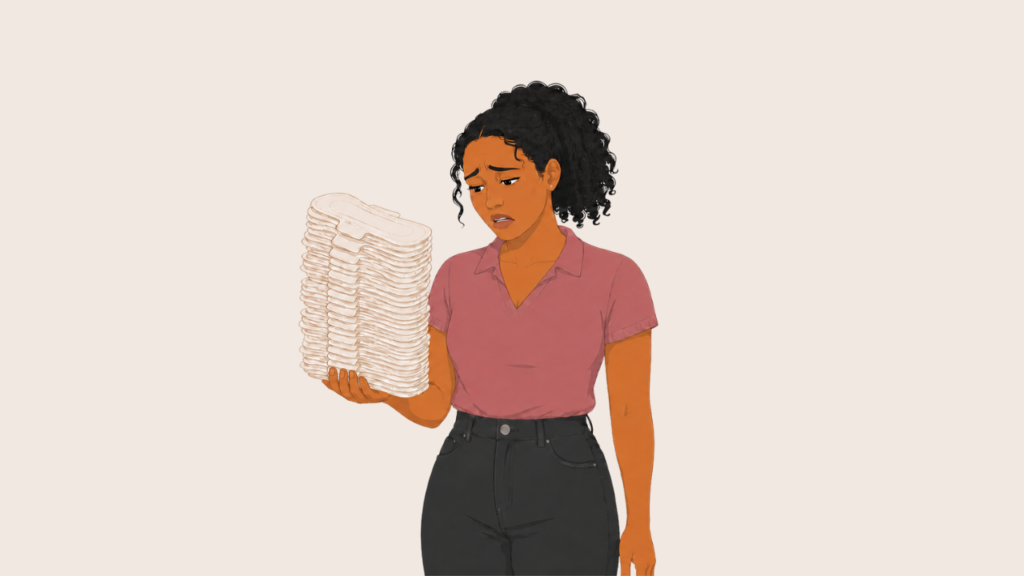
Heavy Periods and Fertility: How to Understand What Your Cycle May Be Saying
Heavy periods can feel like something you’re supposed to push through.
You plan around them. You pack extra supplies. You worry about leaking. You may even tell yourself, “This is just how my body is.”
But when you’re trying to get pregnant, heavy bleeding can start to feel more confusing.
You may wonder:
Is this normal?
Is my period affecting my fertility?
Is my body trying to tell me something?
If you’ve been searching for answers about heavy periods and fertility, we want you to know this first:
A heavy period doesn’t automatically mean you can’t get pregnant.
But it can be a sign that your body deserves a closer look.
At AIM Women’s Wellness Center, we don’t look at your period as an inconvenience to silence. We look at it as communication from your body. Your bleeding, your cycle length, your cramps, your clots, your spotting, your energy, and your mood can all give clues about what may need more support before pregnancy.
What Counts as a Heavy Period?
A heavy period can look different from woman to woman.
For some women, it means soaking through pads or tampons quickly. For others, it means bleeding for many days, passing large clots, waking up at night to change protection, or feeling completely drained during and after their period.
It may also look like planning your life around your flow because you’re afraid of bleeding through your clothes.
And while heavy bleeding may be common, that doesn’t always mean it’s normal for your body.
Your period should not leave you feeling depleted, dizzy, exhausted, or like you have to disappear from your life for several days each month.
If your bleeding feels extreme, changes suddenly, or comes with severe pain, it’s important to talk with your medical provider.
But even when you’ve been told everything is “fine,” your period is still offering helpful information about your fertility environment!
Can Heavy Periods Affect Fertility?
Heavy periods don’t always prevent pregnancy.
Some women with heavy bleeding ovulate regularly and conceive without difficulty. Other women have heavy periods because of an underlying pattern that may also affect ovulation, implantation, inflammation, hormone balance, or the uterine environment.
That’s why the better question isn’t, “Do heavy periods cause infertility?”
The better question is:
What is causing the heavy bleeding, and does that pattern matter for my fertility?
Heavy bleeding is a symptom. It’s not the full story.
Your body may be showing you that something underneath the surface needs support.
Your Period Is Part of Your Fertility Picture
Your menstrual cycle isn’t separate from your fertility. It’s part of it.
Each month, your body goes through a coordinated conversation between your brain, ovaries, hormones, uterine lining, thyroid, metabolism, immune system, and nervous system.
When that conversation flows smoothly, ovulation can happen, progesterone can rise, the uterine lining can respond, and the body can prepare for the possibility of pregnancy.
When something is off, your period may be one of the ways your body communicates that.
Heavy bleeding may point to patterns like:
- Hormones needing more balance
- Inflammation
- Fibroids or polyps
- Endometriosis or adenomyosis
- Thyroid imbalance
- Blood sugar issues
- Poor ovulation patterns
- Low iron or nutrient depletion
- A bleeding or clotting concern
- A uterine lining that needs evaluation
This doesn’t mean you need to panic.
It means your period may be giving you information.
If you’re not sure where to begin, understanding which fertility tests to ask for can help you walk into the conversation with more clarity instead of trying to chase every possible answer.
Heavy Bleeding and Hormone Balance
One of the most common patterns we look at with heavy periods is hormone balance.
Estrogen helps build the uterine lining. Progesterone helps stabilize and support that lining after ovulation.
When ovulation is irregular, progesterone may not rise in the way the body needs. When estrogen and progesterone aren’t in a healthy rhythm together, the lining may become heavier or less stable, and bleeding may become more intense.
This is one reason we don’t only ask, “Are you getting a period?”
We also want to understand:
- Are you ovulating?
- When are you ovulating?
- How long is your luteal phase?
- Do you spot before your period?
- Are your cycles regular or unpredictable?
- Do you have PMS, breast tenderness, migraines, or mood changes?
- Do you feel wiped out during your period?
Your period is not just the end of a cycle. It can give clues about what happened throughout the entire cycle.
If you notice spotting before your period, a short luteal phase, or symptoms that make you wonder if the second half of your cycle needs support, learning more about low progesterone symptoms and fertility may be a helpful next step.
Heavy Periods, Inflammation, and Pain
Heavy bleeding can sometimes show up alongside pain, cramping, bloating, pelvic discomfort, digestive symptoms, or fatigue.
When heavy periods come with significant pain, we want to look deeper.
Painful periods may be connected to inflammatory patterns, endometriosis, adenomyosis, fibroids, pelvic congestion, or other issues affecting the reproductive environment.
Again, this doesn’t mean every woman with heavy bleeding has one of these conditions.
But it does mean your symptoms deserve to be taken seriously.
You shouldn’t have to hear, “That’s just part of being a woman,” when your period is disrupting your life.
At AIM Women’s Wellness Center, we often look at inflammation as part of the larger fertility picture because inflammation can affect the way the body communicates, repairs, circulates, and prepares for pregnancy.
If your heavy periods come with pain, bloating, or other inflammatory symptoms, learning about inflammation and fertility may help you better understand why whole-body support matters.
Heavy Periods, Fibroids, and Polyps
Sometimes heavy bleeding has a structural cause.
Fibroids and polyps are two examples your provider may want to evaluate, especially if your bleeding has changed, become heavier over time, or comes with spotting between periods.
Fibroids are noncancerous growths in or around the uterus. Depending on their size and location, they may contribute to heavy bleeding, pelvic pressure, longer periods, or fertility challenges.
Polyps are growths that can develop in the uterine lining. They may contribute to irregular bleeding, spotting, or changes in the uterine environment.
This is why imaging or additional evaluation may matter for some women.
It’s not about assuming the worst. It’s about understanding the space where implantation and pregnancy need to happen.
Heavy Periods and Iron Depletion
Heavy periods can also affect how you feel physically.
If you’re losing a lot of blood each cycle, your body may become depleted over time. Some women experience low iron or anemia, which can leave them feeling tired, weak, lightheaded, short of breath, cold, anxious, or unable to recover well.
This matters because fertility isn’t only about your ovaries.
Your body needs energy, nutrients, oxygen delivery, and resilience to support conception and pregnancy.
If your period leaves you feeling wiped out, don’t ignore that.
It may be worth asking about bloodwork, including iron and ferritin, especially if heavy bleeding has been going on for a while.
What Your Body May Be Asking For
When we talk about heavy periods and fertility, the goal is not to make you afraid of your cycle.
The goal is to help you listen to it.
Your body may be asking for hormone support.
Your body may be asking for thyroid support.
Your body may be asking for blood sugar support.
Your body may be asking for inflammation support.
Your body may be asking for better nutrient absorption.
Your body may be asking for deeper evaluation of the uterine environment.
And sometimes your body may be asking for rest, nourishment, and nervous system support after months or years of pushing through.
This is why we don’t love one-size-fits-all fertility advice.
Because two women can both have heavy periods for completely different reasons.
One may need support with ovulation and progesterone.
One may need evaluation for fibroids or polyps.
One may need thyroid support.
One may need help reducing inflammation.
One may need to replenish iron and nutrients.
One may need deeper support for endometriosis or pain.
One may need a plan that includes both partners and the whole fertility picture.
The symptom may look similar.
The support may need to be very different.
What to Track If You Have Heavy Periods
If you’re trying to understand what your period may be telling you, tracking can help.
You don’t need to become obsessive or turn your cycle into another thing to control. But gentle tracking can help you notice patterns you may otherwise miss.
Pay attention to:
How many days you bleed
Which days are heaviest
Whether you pass clots
Whether you have spotting before or after your period
How painful your cramps are
Whether you need medication to function
Whether you feel exhausted, dizzy, or weak
Whether you ovulate regularly
How long your luteal phase is
Whether your cycle is changing over time
These details can help you ask better questions.
They can also help you see your body as communicative, not random.
If you want help understanding what your cycle may be trying to tell you, download the free Decoding Your Cycle guide and start looking at your period as information, not just something to survive.
Questions to Ask If You Have Heavy Periods and You’re Trying to Conceive
If you’re trying to get pregnant and your periods are heavy, here are some questions you may want to bring to your provider or fertility team:
Could my bleeding pattern point to fibroids, polyps, endometriosis, adenomyosis, or another uterine concern?
Should we check my thyroid?
Should we check my iron, ferritin, or complete blood count?
Am I ovulating regularly?
Is my luteal phase long enough?
Could progesterone support be relevant in my case?
Could inflammation, blood sugar, or PCOS be part of the picture?
Do I need an ultrasound or additional imaging?
Are there any red flags in my bleeding pattern that need medical evaluation?
What would actually change my plan?
That last question matters.
Because more testing isn’t always the answer.
More clarity is.
When Heavy Periods Feel Emotionally Heavy Too
Heavy periods can be physically exhausting, but they can also be emotionally exhausting.
When you’re trying to conceive, every symptom can start to feel loaded.
A heavy period may not just feel like a heavy period. It may feel like another month of disappointment. Another reminder that you’re not pregnant. Another reason to wonder if something is wrong with your body.
If that’s where you are, please hear this:
Your body is not failing you.
Your period may be communicating that something needs support, but that doesn’t mean you did anything wrong.
You don’t need to blame yourself.
You don’t need to ignore your symptoms.
And you don’t need to figure this out alone.
If every cycle symptom sends your mind into fear, learning more about fertility anxiety may help you understand why your nervous system deserves support too.
How AIM Women’s Wellness Center Supports Heavy Periods and Fertility
At AIM Women’s Wellness Center, we take a whole-body approach to heavy periods and fertility.
We don’t look at your bleeding in isolation. We look at your cycle, symptoms, ovulation patterns, hormones, digestion, inflammation, nutrition, blood sugar, stress, sleep, nervous system, and fertility history.
We also look at what you’ve already tried and where you may still need answers.
Support may include acupuncture, Chinese medicine, nutrition, supplement guidance, cycle education, fertility coaching, nervous system support, and collaboration with your medical providers when additional testing or evaluation may be needed.
Because your period is not just something to endure.
It’s information.
And when you understand that information, you can take your next step with more clarity and less guessing.
If your periods are heavy and you’re trying to conceive, you don’t have to keep wondering whether it matters.
Click here to qualify for a free Fertility Breakthrough Session with The Fertility Godmother to ask your questions, talk through what you’ve been experiencing, and see how Denise can help you feel clearer about your next step.
FAQ
Can heavy periods affect fertility?
Heavy periods don’t always affect fertility, but they can sometimes point to underlying patterns that may matter when you’re trying to conceive. These may include hormone imbalance, fibroids, polyps, endometriosis, thyroid issues, inflammation, or other concerns that deserve a closer look.
Are heavy periods a sign of hormone imbalance?
They can be. Heavy bleeding may sometimes be connected to estrogen and progesterone patterns, irregular ovulation, thyroid function, PCOS, or other hormone-related factors. The key is understanding what’s causing the heavy bleeding in your body.
Should I get testing if I have heavy periods and I’m trying to get pregnant?
It may be worth asking your provider about testing, especially if your bleeding is very heavy, painful, getting worse, includes large clots, causes fatigue or dizziness, or comes with spotting between periods. Testing may include bloodwork, thyroid labs, iron or ferritin levels, and imaging, depending on your symptoms and history.
Can fibroids or polyps cause heavy periods and fertility issues?
Yes, fibroids and polyps can contribute to heavy or irregular bleeding, and depending on their size and location, they may also affect the uterine environment. Your provider can help determine whether imaging or further evaluation makes sense.
What can I do naturally to support heavy periods and fertility?
Natural support may include improving nutrition, replenishing nutrients, supporting blood sugar, reducing inflammation, addressing stress, supporting sleep, and using therapies such as acupuncture or Chinese medicine when appropriate. The right support depends on why your periods are heavy, so personalized guidance matters.